
Wild bees make an important contribution to biodiversity, but they are finding fewer and fewer suitable nesting sites and food sources. HR Campus is therefore creating a protected nesting site for ground-nesting wild bees with a new sand lens on the Farenweid. The project was developed together with the Farenweid Foundation and Pro Natura Zurich.
Endangered diversity: why wild bees need support
Many people are familiar with honey bees. Their wild relatives are less in the limelight, but are at least as important for our natural world. Since HR Campus took over Sponsorships for several honey bee colonies , we have been focussing more intensively on the world of bees. It quickly became clear that while honey bees often receive support, many wild bee species in Switzerland are increasingly lacking habitat and food.
Yet their importance is enormous. Around 600 different species of wild bees live in Switzerland. Many of them nest directly in the ground and are dependent on open, sandy areas. Such habitats have become rare today. At the same time, wild bees make an important contribution to a healthy ecosystem. More than 80% of native flowering plants depend on their pollination. This makes it all the more worrying that around 45% of wild bee species are considered endangered, mainly due to a lack of habitats and flowering plants.
A new habitat on the Farenweid
In order to make a small but effective contribution, we looked for a suitable location for a so-called sand lens. This is a specially created, sandy area that serves as a nesting site for ground-nesting wild bees. We found what we were looking for in Hirzel on the Farenweid. The Farenweid Foundation is committed to preserving the Farenweid as a meeting and recreation area. They were open to working with us and made an area of around 20 square metres available to us.
We also received valuable professional support from Pro Natura Zurich. The experts advised us on the construction of the sand lens and showed us what is important so that the wild bees can colonise it.
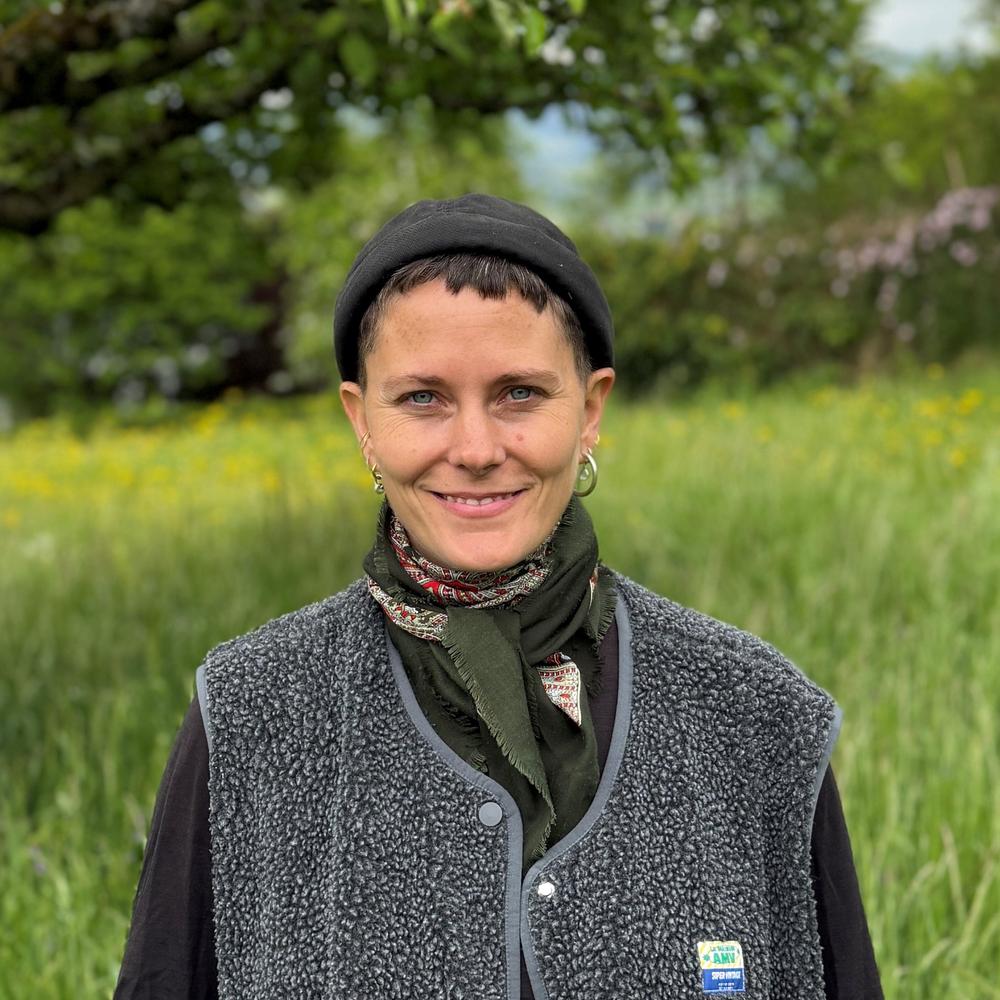
Larissa von Buol
Project manager at Pro Natura Zurich
From excavation to a bee paradise
To build the sand lens, we first removed around 30cm of humus. We then filled the area with 5m³ of wall gravel and 2m³ of special wild bee sand. This combination creates good conditions for ground-nesting wild bees. We planted shrubs around the sand lens, which will serve as a food source for the bees in future. Deadwood trunks were also deliberately placed. Some wild bee species use old beetle burrows in the wood as nesting sites.
Team event with a lasting effect
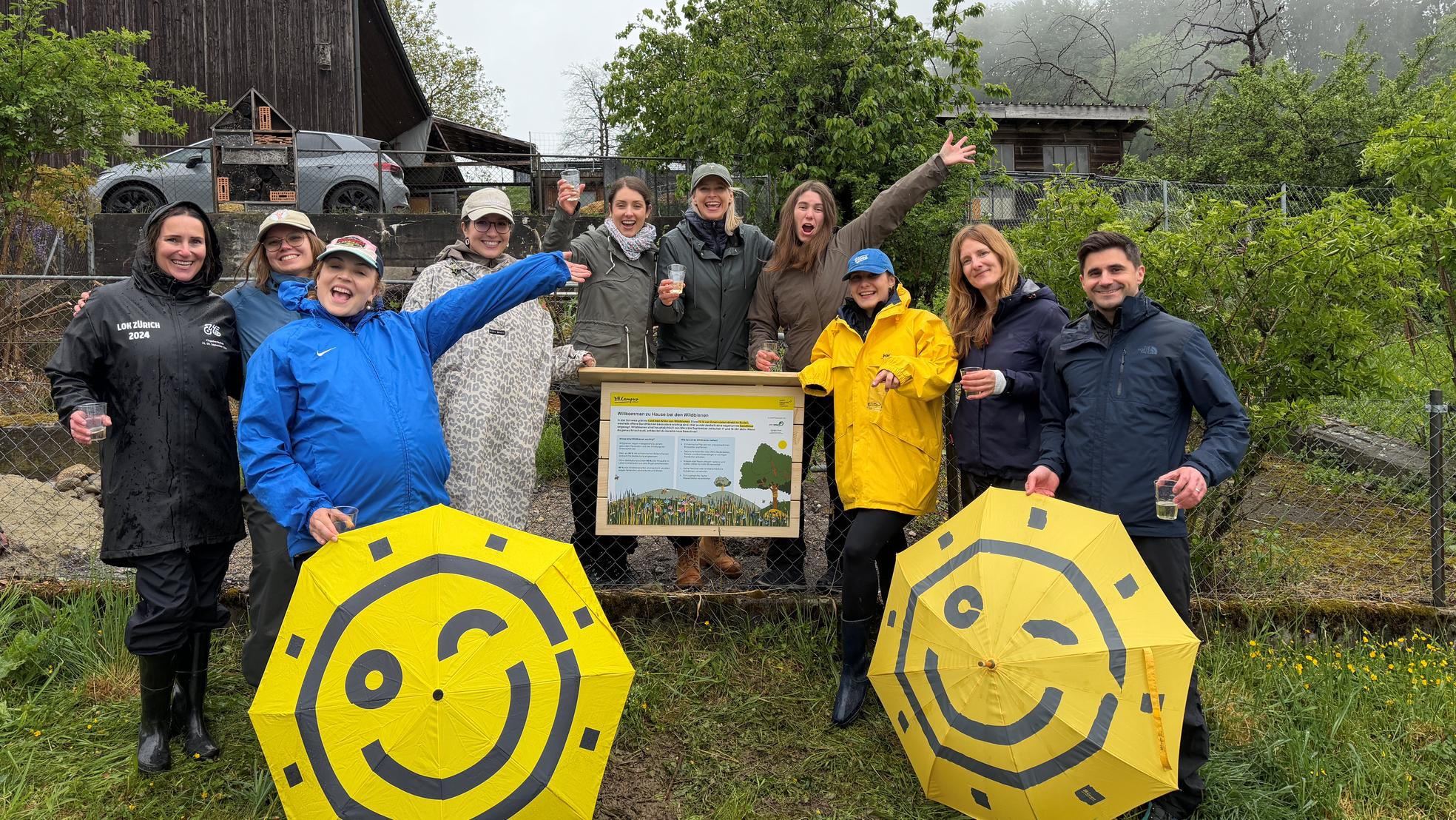
The sand lens was realised by our marketing team as part of their team event. They put a lot of effort into digging, shovelling and planting and learned a lot about biodiversity along the way. Now it's time to be patient and observe. We hope to be able to welcome the first wild bees to our new sand lens soon.
A big thank you to the Farenweid Foundation for the suitable location and to Pro Natura Zurich for their valuable expertise.
New Home for Wild Bees: HR Campus Creates Habitat on the Farenweid
New Home for Wild Bees: HR Campus Creates Habitat on the Farenweid
New Home for Wild Bees: HR Campus Creates Habitat on the Farenweid
New Home for Wild Bees: HR Campus Creates Habitat on the Farenweid
New Home for Wild Bees: HR Campus Creates Habitat on the Farenweid
